4x more production of THAAD interceptors: US to make 400 key missiles per year to meet demand

Rendering Shows Lockheed Martin’s Terminal High Altitude Area Defense (THAAD ) Weapon System Launcher With Eight Canisters. – Lockheed Martin By Prabhat Ranjan Mishra, Published by Interesting Engineering, 1 February 2026 The THAAD framework agreement is the second signed between Lockheed Martin and the DoW. The United States is aiming

Read More

The space company will reportedly build hundreds of satellites bearing Earth-imaging capabilities that can operate as a swarm in low orbits The space company will reportedly build hundreds of satellites bearing Earth-imaging capabilities that can operate as a swarm in low orbits Credit: Cheney Orr/Reuters

Musk’s SpaceX applies to launch a million satellites into orbit

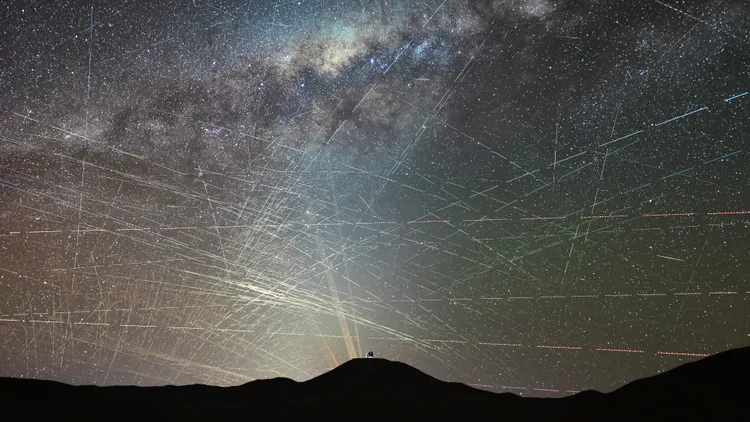
BY Maia Davies, Published by the BBC, 31 January 2026 Elon Musk's SpaceX has applied to launch one million satellites into Earth's orbit to power artificial intelligence (AI). The application claims "orbital data centres" are the most cost and energy-efficient way to meet the growing demand for AI computing power.

Read More

Chinese space tourism startup eyes 2028 for 1st crewed mission, signs celebrity for future flight

Blue Origin's New Shepard vehicle launches six people to suborbital space on Dec. 20, 2025. Beijing-based company InterstellOr aims to launch similar space tourism missions starting in 2028, and actor Johnny Huang Jingyu has booked a seat. (Image credit: Blue Origin) By Andrew Jones, Published by Space.com, 31 January 2026

Read More

The atmospheric reentry process generates extreme heat and mechanical loads, which lead to the satellite's disintegration at the altitude of about 45 miles. (Image credit: ESA)

What actually happens to a spacecraft during its fiery last moments? Here’s why ESA wants to find out

The atmospheric reentry process generates extreme heat and mechanical loads, which lead to the satellite's disintegration at the altitude of about 45 miles. (Image credit: ESA) By Leonard David, Published by Space.com, 31 January 2026 "Understanding how different materials behave as they burn up could help engineers design satellites that

Read More

Russian ‘inspector’ satellite appears to break apart in orbit, raising debris concerns

An illustration of satellites breaking up in Earth orbit. (Image credit: Mark Garlick/Science Photo Library/Getty Images) By Andrew Jones, Published by Space.com, 30 January 2026 Ground-based observations suggest the former geostationary inspector satellite suffered a fragmentation event months after retirement, raising new concerns about debris in high Earth orbit. A

Read More