The Global Network

        Against Weapons and Nuclear Power in Space

Menu
  • About Us
    • 33 years of peace in space activism
    • Affiliates
    • Board of Directors
      • Bruce Gagnon
        • Bruce’s Blog
        • This Issue
        • Space Alert Videos
      • Remembering Rao
    • History of GN
    • Mission Statement
    • Donate
  • Keep Space for Peace Week
    • KSFPW Events 2025
    • KSFPW Events 2024
    • KSFPW 2023 Events
  • Reports/Articles
    • GN Reports
      • Report and Newsletter from Aotearoa
    • Posts
    • Conversion
    • Environmental Effects
    • Nuclear Power in Space
      • Nuclear Incidents in Space
      • Plutonium Contamination
    • Space Mining
  • Resources
    • Newsletters
    • Global Network Statement on Golden Dome
    • Some Useful Information
    • Videos
      • Space Alert Videos
  • Membership
    • Donate
  • Contact Us
  • Events

Nukes in Space

Ekipazh: Russia’s top-secret nuclear-powered satellite

October 7, 2019
| No Comments
| Electronic Warfare, Nukes in Space, Russia, Satellites

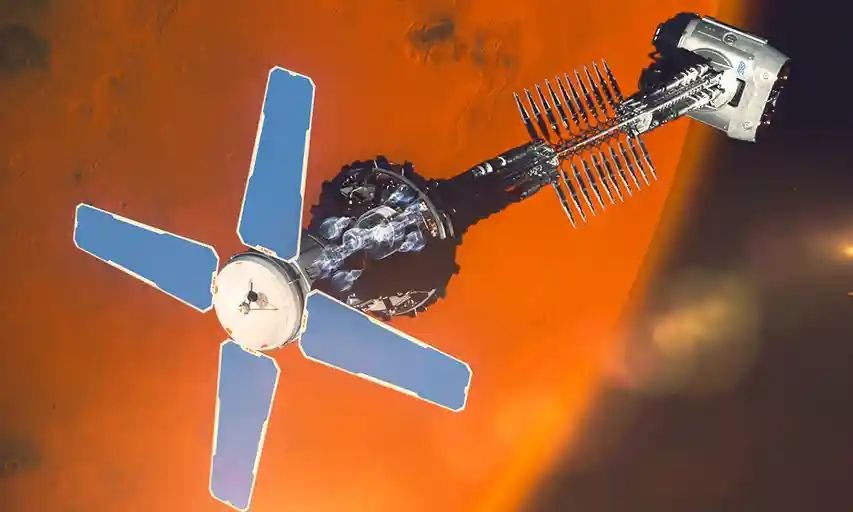
The one-megawatt TEM as proposed in 2010. By Bart Hendrickx, Published by The Space Review, 7 October 2019 There is strong evidence from publicly available sources that a Russian company called KB Arsenal is working on a new type of military satellite equipped with a nuclear power source. Called Ekipazh,

Read More

  • 15 of 15
  • « Previous
  • 1
  • …
  • 13
  • 14
  • 15

Working to Keep Space for Peace for 30 years

Mail PO Box 652, Brunswick ME 04011 USA
About the GN

We are an international network of organisations and individuals who are concerned about the militarisation and exploitation of space.

Phone:(207) 844-8187

Email:globalnet@mindspring.com

Bluesky:keepspace4peace.bskyb.social

Facebook:www.facebook.com/space4peace

Youtube:youtube.com/gnspace4peace

Twitter:twitter.com/KeepSpace4Peace

Instagram:instagram.com/space4peace

Useful Links
  • About Us
  • Resources
  • Newsletters
  • Videos
  • Contact Us
  • Donate
Latest Posts
  • Every patch of human skin the size of a pencil eraser carries roughly a million bacteria, and NASA now warns those microbes vent from spacesuits and could survive in the shaded craters near the Moon’s South Pole for days after the astronauts leave
    September 2, 2026
  • Hours after a Soviet nuclear satellite broke up over Canada in 1978
    August 29, 2026
  • Russian ‘Starlink’ constellation satellites falling from orbit
    August 25, 2026
The Global Network Against Weapons and Nuclear Power in Space