Lt. Gen. David Miller, U.S. Space Force’s Space Operations Command commander, speaks at a change of command ceremony at Peterson Space Force Base, Colo., Jan. 9, 2024. Credit; Dennis Rogers Credit: (U.S. Space Force Photo/Dennis R

Space Force to lean on private sector for space tracking data

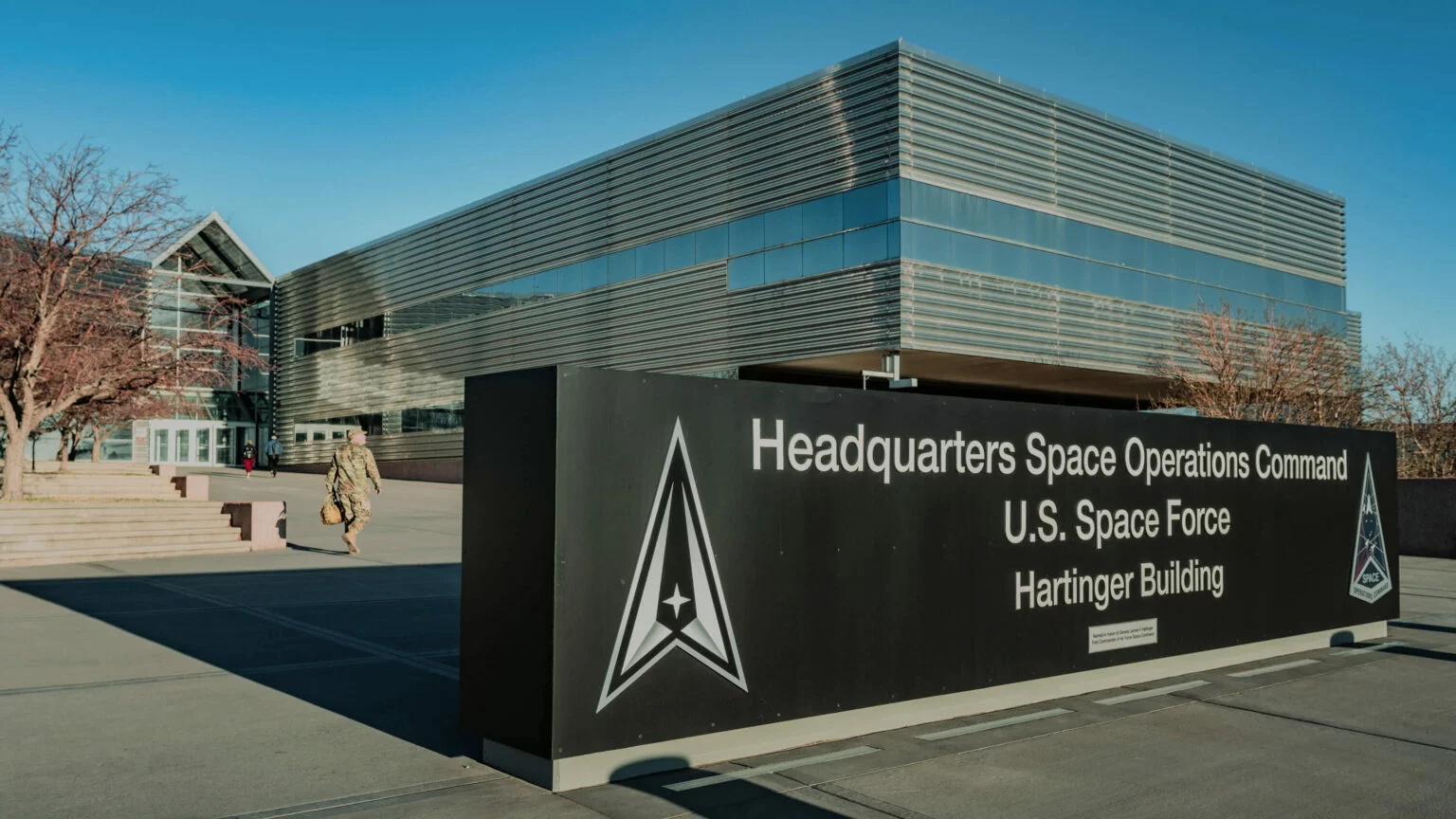
Lt. Gen. David Miller, U.S. Space Force’s Space Operations Command commander, speaks at a change of command ceremony at Peterson Space Force Base, Colo., Jan. 9, 2024. Credit; Dennis Rogers Credit: (U.S. Space Force Photo/Dennis R By Sandra Erwin, Published by Space News, 27 February 2024 Lt. Gen. Miller, head of Space

Read More

Russian space nuke wouldn’t alter US orbital-network plans, Space Force says

The Space Development Agency's constellation “Proliferated Warfighter Space Architecture" was formerly known as the “National Defense Space Architecture." Credit: SDA By Audrey Decker, Published by Defense One, 27 February 2024 The nascent Proliferated Warfighter Space Architecture is built on the idea that lots of satellites offer plenty of redundancy. Reports

Read More

Northrop Grumman's concept art for the Evolved Strategic SATCOM program.

Space Force bucks fixed-price trend for nuclear command satellites

Northrop Grumman's concept art for the Evolved Strategic SATCOM program. By Sandra Erwin, Published by Space News, 26 February 2024 Acquisition executive Frank Calvelli said the Space Force will award cost-plus contracts for the upcoming Evolved Strategic Satellite Communications System WASHINGTON — In a departure from recent guidance, the Space

Read More

An artist's impression of the TIMED spacecraft scanning Earth in orbit. (Image credit: Johns Hopkins APL/Steve Gribbenu003c/strongu003e)

Russian satellite narrowly avoids collision with US spacecraft, and NASA could do nothing to stop it

An artist's impression of the TIMED spacecraft scanning Earth in orbit. (Image credit: Johns Hopkins APL/Steve Gribbenu003c/strongu003e) By Ben Turner, Published by Live Science, 28 February 2024 NASA's TIMED satellite narrowly avoided hitting a defunct Russian satellite in the early hours of the morning. An active NASA spacecraft has survived a

Read More

To Improve Starlink Speeds, SpaceX Wants to Orbit Satellites Closer to Earth

By Michael Kan, Published by PC Magazine, 21 February 2024 The company is requesting to orbit some second-generation Starlink satellites 'in the 340 km-360 km range,' according to an FCC filing. To boost Starlink speeds, SpaceX is asking for regulatory clearance to orbit some satellites about 200 kilometers (124 miles)

Read More