
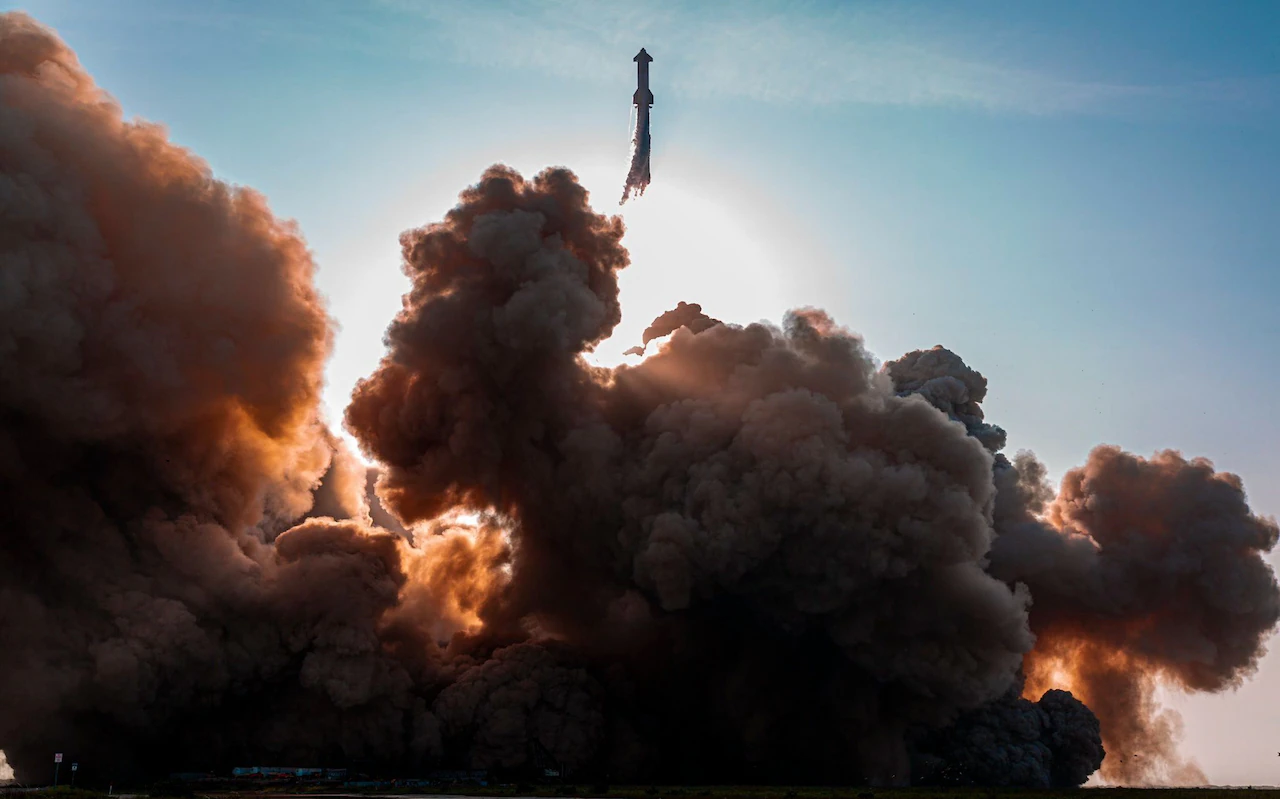
Image Credit: SpaceX
By Stephen Marcantel,
Published by The Current, 3 September 2026
By the time the public comment period on a proposed Federal Aviation Administration rule change closed Monday night, thousands had shared their thoughts — more than half of them mentioning Louisiana and its rapidly eroding coastline, fragile wetlands and migratory bird populations.
The proposed change would allow the FAA to fast-track approval of launch facilities like SpaceX’s recently announced Starbase Louisiana in Vermilion Parish. In the planning process for that $100 billion project, there was no official public comment process prior to approval, leading over 1,000 people to voice their concerns to the FAA instead.
“We tamed this land, full of mosquitoes, water moccasins, and alligators, to the best of our ability. We’ve become symbiotic [with] all of the nature in south Louisiana,” self-described lifelong Louisiana resident and Vermilion Parish native Tim Meaux writes.
“Apparently my voice, and millions of others, have zero say [in] what becomes of Vermilion Parish because our politicians have once again sold their souls for corporate welfare,” Meaux continues in his comment to the agency, asking them to hold SpaceX accountable. “With our Louisiana government completely failing to hold on to any protection for us, you are our last bastion of hope.”
On the state level, the Louisiana Legislature recently passed a slew of laws that shield SpaceX and companies with similar projects from certain legal responsibility and damage claims from residents affected by their facilities.
The 1,647 public comments specifically mentioning Louisiana, a majority of which were submitted in the week after the SpaceX announcement, criticize the plans for the 125,000-acre Vermilion Parish launch facility, and warn of the possibly irreparable harm that a launch site could cause if federal guardrails were waived.
“Anyone who lives here and knows the area, the marshlands, ecosystem, knows this is the most inappropriate site for such a facility,” writes Nina Guidry, who describes herself as a Vermilion Parish resident. “[The] majority of people in this parish, if asked, would be dead against SpaceX locating here. We were never given that courtesy. It was decided in backroom deals of our state legislators signing NDAs and our governor. It will impact a centuries old way of life & traditions.”
If approved, the new rule would waive the need for compliance with more than a dozen environmental protections, including the Clean Water Act and the Endangered Species Act, in the issuing of permits for launch facilities.
A handful of environmental groups, such as the Louisiana Wildlife Federation, National Wildlife Federation and the Pontchartrain Conservancy, were among the first to publicly criticize the waiver request, which the FAA proposed on July 30.
“We believe a strong permitting review does help with site planning and project construction. Other projects undergo the same review, and these are really important oversight processes to protect our natural resources.” Rebecca Triche, director of the LWF, tells the Current.
Of the more than 3,000 comments on the proposed waiver, more than 600 comments mention Vermilion Parish directly, many coming from current or former parish residents.
Paula Rae Broussard, an American expat living in New Zealand who has roots in Vermilion Parish, says she’s “deeply concerned” about the effect the waiver may have on the protection of the fragile ecosystem around the planned SpaceX site.
“Vermilion Parish should not be treated as a test case for reducing federal environmental oversight simply because the project promises economic development,” she writes in her comment. “My grandparents live on land that has been in our family since my great-great-grandparents. That land isn’t just property. It is our history. It is where our family comes from. It is our place.”
Meanwhile, the promise of economic development is the main argument the administration of Gov. Jeff Landry has used to support its handling of the SpaceX proposal, while questioning the validity of public concerns. The much-criticized secrecy, the administration has argued, was necessary for Louisiana to be competitive in attracting the company.
“I don’t know where we find these people that are complaining,” Landry told KPLC in a recent interview. “I don’t know how there’s any downside to this.”
The Trump administration has also cited commercial competitiveness as the reason for the proposed rule to waive certain environmental laws in the process of granting licenses for launch sites.
“The proposed rule builds on President Trump’s innovative “Enabling Competition in the Commercial Space Industry” Executive Order and advances a decades-old Congressional mandate to simplify and expedite commercial space licensing,” an FAA spokesperson told The Current.
“The FAA is reviewing all comments received during the comment period and will consider each while preparing the final rule,” the spokesperson added.
Much of the drive for residents to raise their concerns about SpaceX after the project was announced happened on social media.
Take Karol Bourque’s Facebook page for example. The biologist and owner of a small farm south of Youngsville, near the border of Lafayette and Vermilion parishes, usually fills it with videos of farm animals. But lately, it has become a place to spread awareness of the impacts SpaceX might have on farmers and landowners in South Louisiana. She also used her platform to encourage people to reach out to the FAA with their concerns.
“I’m not anti-SpaceX,” Bourque tells the Current. “It’s all the secrecy, the NDAs, the laws protecting all these powerful people and companies.”
She researched how SpaceX’s Texas launch site has impacted that community, bringing up the lawsuit brought by South Texas residents arguing that the sonic booms caused by rockets had damaged their homes. She worries that issue could be recreated near the Vermilion Parish site.
“Is it good to have some economic development for Louisiana?” she asks. “Yes. But at what cost?” Borque tries to remain optimistic that the project won’t bring more harm than good. “We can hope,” she says. “That’s all we can do is hope.”
See: Original Article


