When China plays orbital hide-and-seek, Maui’s telescopes give the US an edge

Perched atop a Hawaiian volcano, the telescopes of U.S. Space Force's Maui Space Surveillance Complex provide a clear view of passing satellites. Jennifer Hlad / Defense One By Jennifer Hlad, Published by Defense One, 19 September 2025 In an interview, Space Force’s Saltzman reveals what’s next for the key sensor site.

Read More

Space Development Agency launches first operational satellites

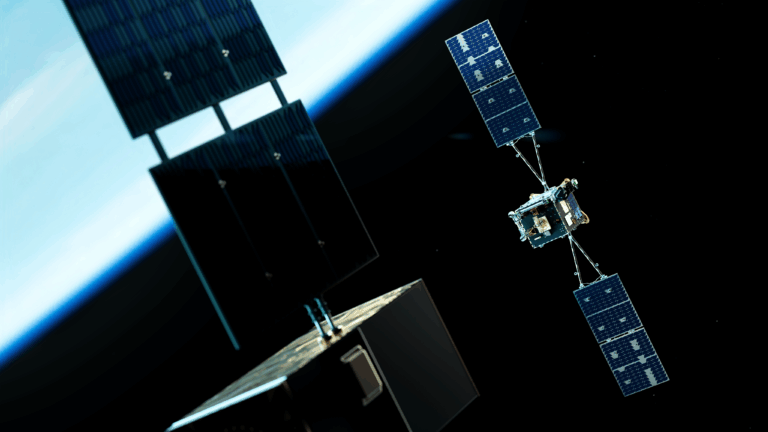
Northrop Grumman's low-Earth orbit constellation of satellites detecting missile launches by an unidentified adversary. Northrop Grumman was selected to build 14 satellites with infrared sensors for the Space Development Agency’s Tranche 1 Tracking Layer (T1TRK) to detect, identify, and track hypersonic weapons and missiles from their earliest stages of launch

Read More

Space Force to use small satellites for geostationary communications

Astranis is developing a geostationary commercial satellite called Omega that is being pitched to the U.S. military for broadband communications. Credit: Astranis By Sandra Erwin, Published by Space News, 4 September 2025 For decades, the military has relied on large, multi-ton satellites for global communications from geostationary orbit (GEO), a

Read More

Trump directs U.S. Space Command move to Huntsville, reversing Biden decision

By Sandra Erwin, Published by Space News, 2 September 2025 The headquarters of U.S. Space Command will be relocated from Peterson Space Force Base, Colorado, to Redstone Arsenal, Alabama WASHINGTON — President Donald Trump on Sept. 2 announced the long-anticipated relocation of U.S. Space Command headquarters from Colorado Springs, Colorado,

Read More

Rocket Lab unveils new pad as firm preps first Neutron rocket launch

Rocket Lab's Neutron launch vehicle will fly from Virginia's Mid-Atlantic Regional Spaceport in Wallops Island. (Rocket Lab) By Courtney Albon, Published by Defense News, 29 August 2025 WALLOPS ISLAND, Virginia— As Rocket Lab prepares to roll out its new Neutron rocket as a fresh competitor for military and commercial missions,

Read More

Geost to supply two optical payloads for U.S. Space Force geostationary missions

Illustration of congestion in geostationary orbit. Credit: ESA/ID&Sense/ONiRiXEL; CC BY-SA 3.0 By Sandra Erwin, Published by Space News, 28 August 2025 WASHINGTON — Rocket Lab’s newly acquired subsidiary Geost has secured an expansion of a U.S. Space Force contract to produce two optical payloads for missions in geostationary orbit. The

Read More